| treated in closed, vibration free booth or cabinet made of strong steel, lined with wear resistant alloy liners. For maintenance purpose proper inspection door and ventilation are essential. |
|
| 3. Abrasive Recovery System and Elevator: |
| The abrasives are recovered at the bottom of the cabinet by means of a screw conveyor and delivered to the base of the elevator, which then carries these to the separator. |
|
| 4. Separator: |
| Before abrasives enters into the blast wheel for reuse, these have to be cleaned of all contaminants. This is the role of the air separator. |
|
| 5. Dust Collector : |
| The last essential feature is the filtration, which retrieves dust laden air from the separator and cabinet ventilation system and discharges clean air into atmosphere for pollution free environment. |
|
| 6. Work Handling : |
| Various systems exist for conveying the parts depending on the type, size and quality of the items to be treated. |
|
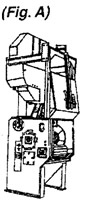 |
| Tumblast Type Machine |
(Fig. A) :
This design employs endless conveyor belt made of steel link and flats or rubber belt, which does not damage the job during tumbling. |
|
|
|
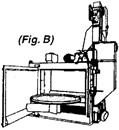 |
| Table Type Machine |
(Fig. B) :
In this type of machine parts being cleaned must be positioned or repositioned on the table to assure complete cleaning of the full surface. |
|
|
|
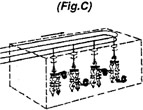 |
| Monorail Hanger Type Machine |
(Fig. C)
In this type of machine, parts are suspended on trees hung on hanger or special fixtures and are carried into the abrasive stream. |
|
|
|
|
|



 New Development In Shot Blasting Machine (2/4)